Revenue sharing from technology transfer
Revenue sharing from technology transfer
The transfer of technology from academia to the socio-economic sphere is essential to fostering innovation and economic growth.
When financial revenues are generated from the exploitation of technology, mechanisms are put in place to share the value created among the various stakeholders, including inventors.
According to Article L.611-7 of the French Intellectual Property Code (IPC), employers (in both the private and public sectors) must compensate employee-inventors for inventions made during the course of their employment or outside the scope of their duties when the invention has been assigned to the employee.
When financial revenues are generated from the exploitation of technology, mechanisms are put in place to share the value created among the various stakeholders, including inventors.
According to Article L.611-7 of the French Intellectual Property Code (IPC), employers (in both the private and public sectors) must compensate employee-inventors for inventions made during the course of their employment or outside the scope of their duties when the invention has been assigned to the employee.
Compensation in the absence of exploitation of the invention
Compensation in the event of exploitation
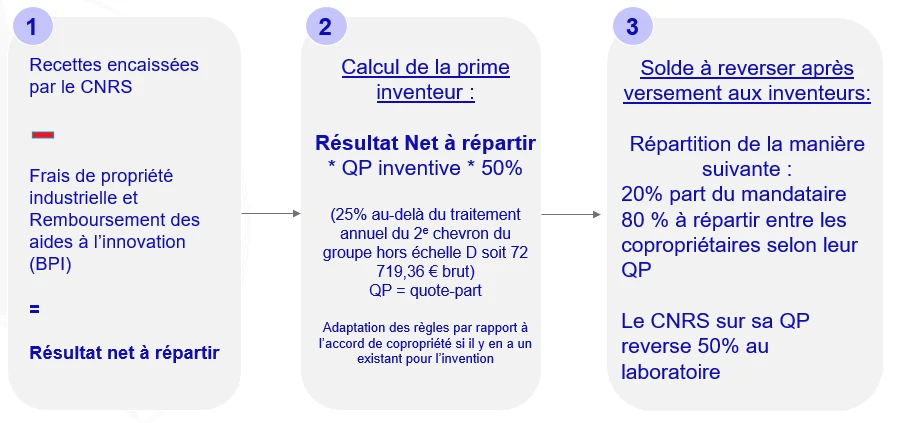
The incentive bonus is additional compensation granted to eligible inventors based on the amounts received each year by the entity that filed or co-filed the patent.
Patented inventions, software, code deposits, secret know-how, and confidential technical files may be subject to commercialization or other forms of exploitation, allowing their authors to receive an incentive bonus in accordance with the French Intellectual Property Code.
In the event of multiple inventors, the incentive bonus is divided among them according to their respective shares of the inventive contribution.
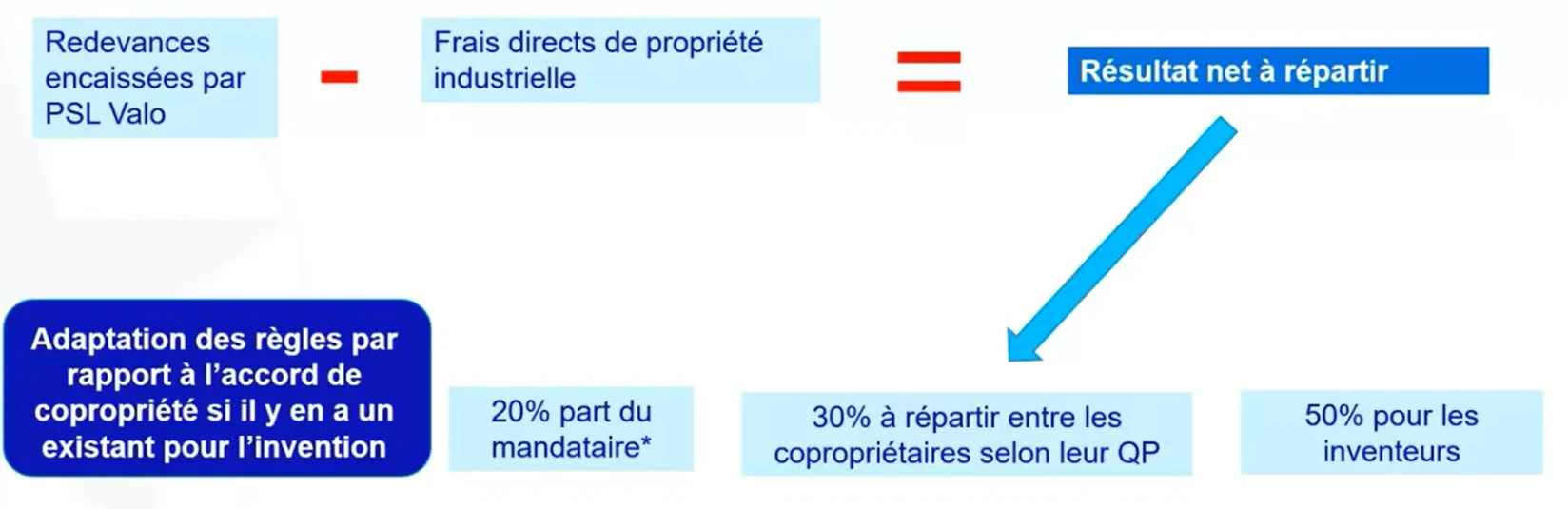
The bonus is granted after the value-sharing mechanisms described below have been applied. There is often a difference between the gross revenues received and the net revenues received by the commercialization entity, which deducts expenses incurred for the protection and commercialization of the invention.
Patented inventions, software, code deposits, secret know-how, and confidential technical files may be subject to commercialization or other forms of exploitation, allowing their authors to receive an incentive bonus in accordance with the French Intellectual Property Code.
In the event of multiple inventors, the incentive bonus is divided among them according to their respective shares of the inventive contribution.
The bonus is granted after the value-sharing mechanisms described below have been applied. There is often a difference between the gross revenues received and the net revenues received by the commercialization entity, which deducts expenses incurred for the protection and commercialization of the invention.