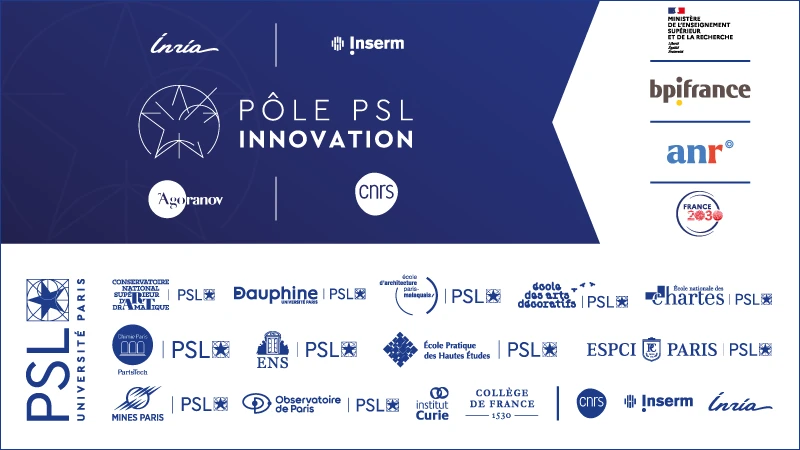
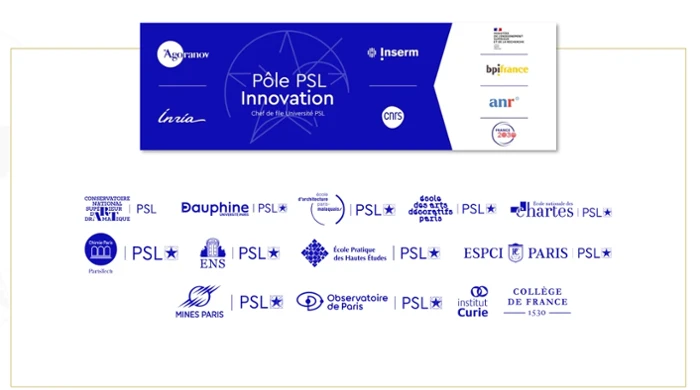
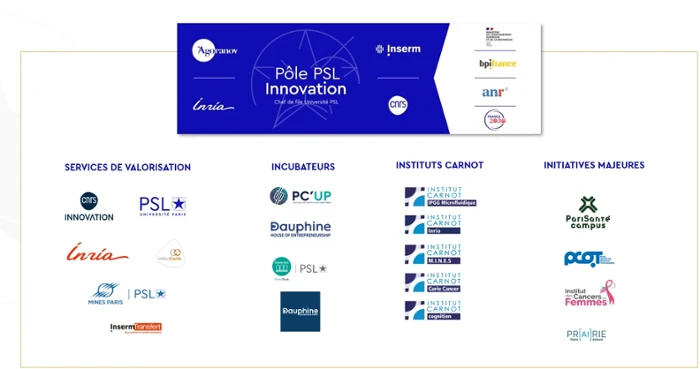
The PSL Innovation Hub brings together Université PSL, CNRS, INRIA, INSERMand Agoranov. Its primary mission is to structure, coordinate, and amplify technology and research transfer activities carried out by its member institutions and affiliated organizations. The Hub also strengthens its ties and cooperation with the socioeconomic community. The goal is to maximize the impact of the research conducted by these institutions.
The PSL Innovation Hub at a glance
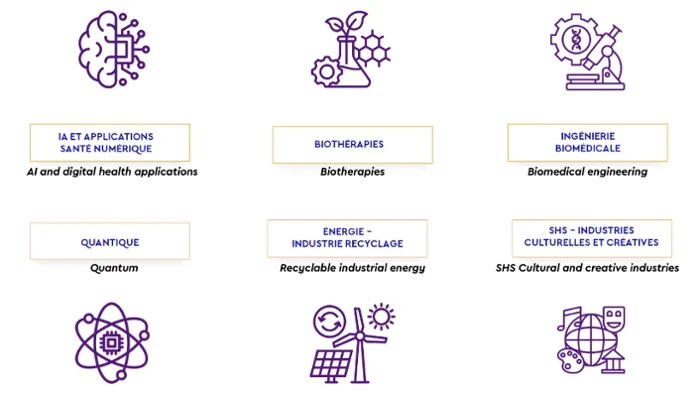
A broad and interdisciplinary scope: It encompasses innovation in all its forms, as well as all disciplines and fields of application.
A tailored program and customized services for PhD students, researchers, engineers, faculty members, healthcare professionals, and our socioeconomic partners.
An exceptional momentum, driven by all stakeholders within the PSL ecosystem, which will be further strengthened to maximize societal and economic impact. Université PSL, a winner of the University Innovation Hubs call for proposals funded by France 2030 and the French Ministry of Higher Education and Research, has secured €11 million in funding over four years to strengthen its innovation activities. This recognition highlights the dynamism of its ecosystem and has led to the creation of the PSL Innovation Hub.
Key Figures for the PSL Innovation Hub
140
laboratories
13
institutions
2,500
researchers
France's No. 1 university
(THE 2025 ranking)
€28 million
in contract research per year
60
patent applications filed per year
40
spin-offs created since 2020
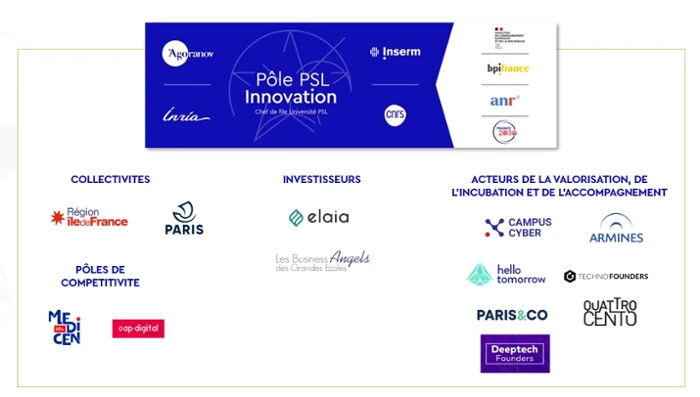
The PSL Innovation hub brings together a large number of stakeholders
A platform for creating and accelerating deep tech start-ups, with services designed and delivered by actors in breakthrough innovation.